 Fraunhofer Cluster of Excellence Immune-Mediated Diseases
Day of Immune Research 2025
The sixth Day of Immune Research of the Fraunhofer Cluster of Excellence Immune-Mediated Diseases CIMD took place in Frankfurt am Main on November 21st, 2025. This time, the event was held at the Fraunhofer Institute for Translational Medicine and Pharmacology ITMP's new building on the Niederrad campus, with around 120 attendees. These included employees from 12 Fraunhofer institutes, as well as representatives from 11 universities, university hospitals and research institutes, a federal authority (PEI) and 12 companies.
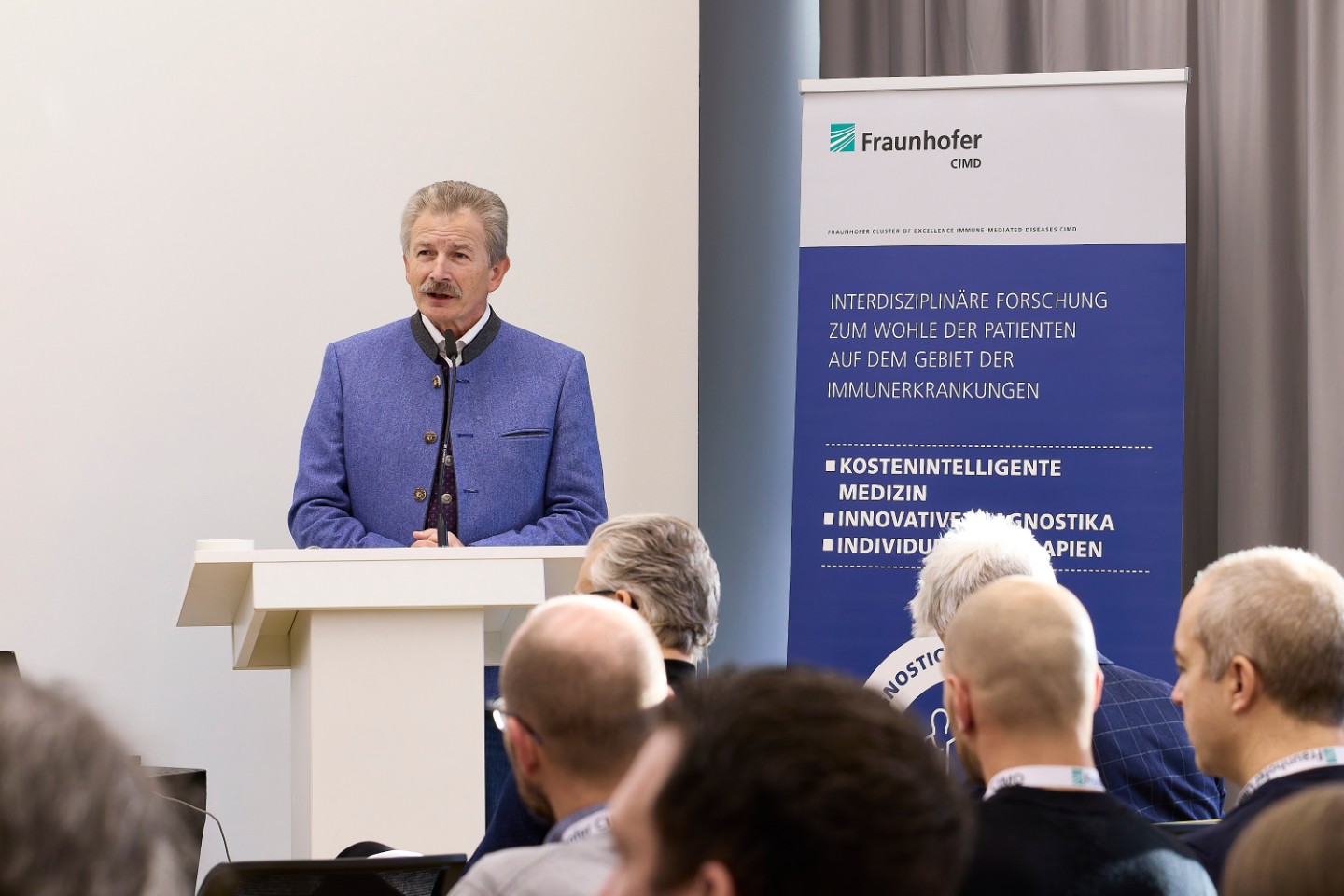
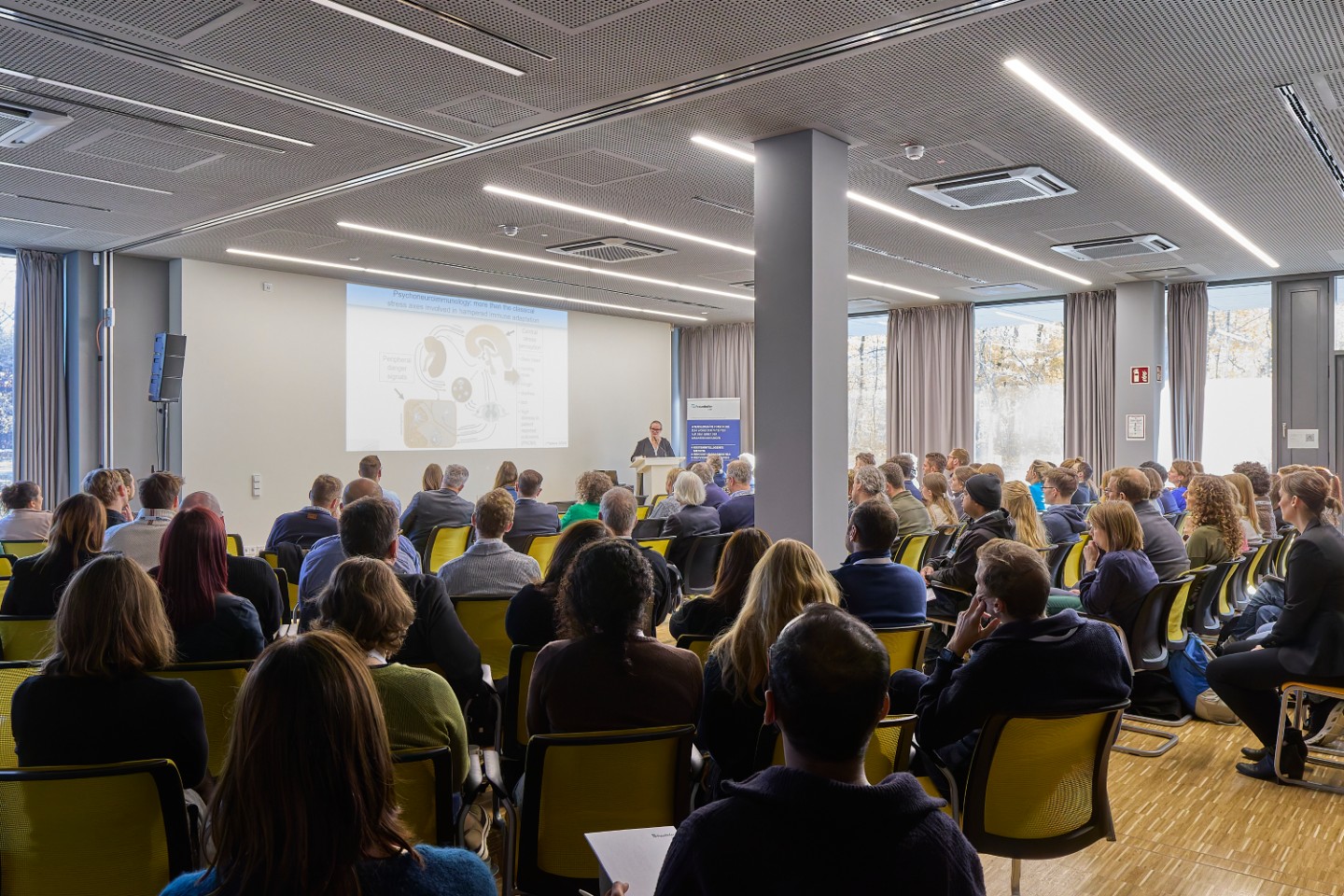
Prof Dr Dr Gerd Geißlinger, Director of Fraunhofer ITMP and spokesperson for Fraunhofer CIMD, opened the event with a short welcome address. Prof Dr Frank Behrens, Deputy Director of Fraunhofer ITMP and Scientific Coordinator of Fraunhofer CIMD, then took over as moderator for the morning session, guiding the participants through the programme until the lunch break. In the afternoon, Prof Dr Jörn Kohlhammer, head of department at the Fraunhofer Institute for Computer Graphics Research IGD and member of the Fraunhofer CIMD board of directors, took over as moderator.
The event kicked off with a focus on the future of healthcare and medical research in Germany. Dr Tim Flink, Manager for Research and Development Policy at the Association of Research-Based Pharmaceutical Companies (vfa), shed light on the political and academic landscape of research and development in Germany, presenting reform progress such as the Medical Research Act and national platform projects. Prof Dr Janne Vehreschild, Founding Director of the Institute for Digital Medicine and Clinical Data Science at Goethe University Frankfurt, then provided an overview of projects and platforms in the field of healthcare and medical research data.
The second thematic session focused on the various influences on the immune system, as well as the associated opportunities and challenges. The session was opened by Prof Dr Eva Peters, Head of the Psychoneuroimmunology Laboratory at Justus Liebig University in Giessen, who gave a presentation on the effects of stress on the immune system. She illustrated this with basic concepts and examples in the field of chronic inflammatory skin diseases. After the coffee break, João Duarte (PhD, MD), Senior Director at UCB, spoke about modern therapeutic strategies, current cellular and molecular findings, and innovative methods that could influence future drug development. Dr Sandy Tretbar, a group leader at the Fraunhofer Institute for Cell Therapy and Immunology IZI, then gave a presentation on the cell therapy platform and the potential of CAR-T cells for treating autoimmune diseases. PD Dr Lena Biehl concluded this section of the programme with a presentation on the microbiome and its influence on the immune system, as well as the results of current microbiota-based therapy studies.
After the lunch break, the programme continued with a discussion of advanced approaches to medical treatment. Dr Nadine Biesemann, Head of Type 1/17 Immunology Research at Sanofi, shared some fascinating insights into ongoing projects and studies under the title 'From Target Discovery into Patient Trials: Bridging Immunology Research to Early Clinical Development”. Boris Engels, PhD, Senior Director at Miltenyi Biotec, then presented innovative approaches to cell and gene therapies for non-tumour indications, focusing particularly on the use of CAR-T cells in autoimmune diseases. Büsra Kösoglu-Kind, IT Architect and Quantum Ambassador at IBM, then followed with a presentation on the potential of quantum computing applications for healthcare and life sciences, reporting on current research projects using quantum computers to solve complex scientific problems. Prof Dr Florian Büttner, a professor at Goethe University Frankfurt and the German Cancer Research Center (DKFZ), concluded the session by presenting the opportunities and challenges of machine learning methods for data-based integration, interpretation, and application.


During the final session of the day, Fraunhofer CIMD presented its current research projects. PD Dr Thomas Grunwald, Head of the Vaccines and Infection Models Department at Fraunhofer IZI, discussed the use of adeno-associated viral vectors (AAVs) as a platform for cell therapies such as antibody transfer for treating immune diseases like type I allergies. Prof. Dr Christian Bär, head of the RNA Technology and Regenerative Strategies working group at the Fraunhofer Institute for Toxicology and Experimental Medicine ITEM, spoke about the development of multicellular heart organoids as a fast, safe, and reliable alternative for clinical translation, for example for cardiotoxicity screening, drug testing, and disease modeling. Prof Dr Jörn Kohlhammer, Head of Department at Fraunhofer IGD, provided insights into the Fraunhofer CIMD Living Lab for data intelligence. The laboratory analyses and visualises clinical data to make it usable, with the aim of developing diagnostic and prognostic methods, promoting data-driven medicine, and strengthening collaboration between analysts and physicians. Dr Christian Werno, Head of the Molecular and Functional Assays Department at Fraunhofer ITEM, concluded the event by presenting the PEDRA 2.0 project — a fast-track platform for the combined target identification and ex vivo testing of immunomodulatory anti-cancer agents which aims to prevent failures in clinical trials.
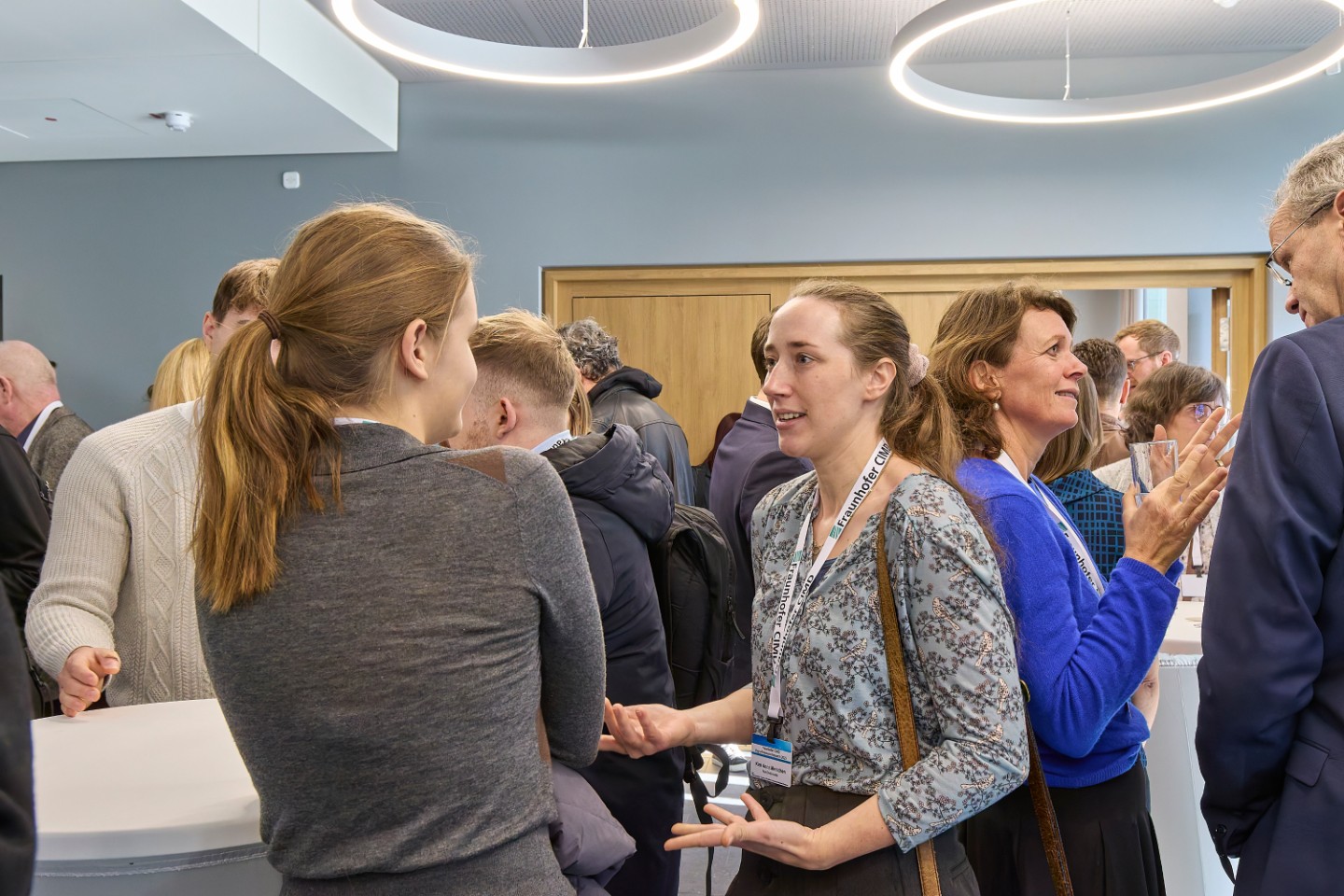
During the two poster sessions, which took place at midday and in the afternoon of the event, 25 posters were presented in two guided poster walks, with the presenters giving short talks about their work. In addition to the organised poster walks, participants were given time to exchange ideas individually at the posters.
The sixth Fraunhofer CIMD Day of Immune Research was a successful continuation of networking, collaboration and cooperation opportunities along the 4D within the entire Fraunhofer Society and beyond.
We are pleased to announce the next Fraunhofer CIMD Day of Immune Research, which will take place on 17 November 2026, and hope to welcome as many participants as possible. Further information will be available soon on our website. To ensure you don't miss any announcements, please sign up for our


